Showing posts with label vancouver island. Show all posts

Saturday, October 29, 2016

First Pines Near Nanimo

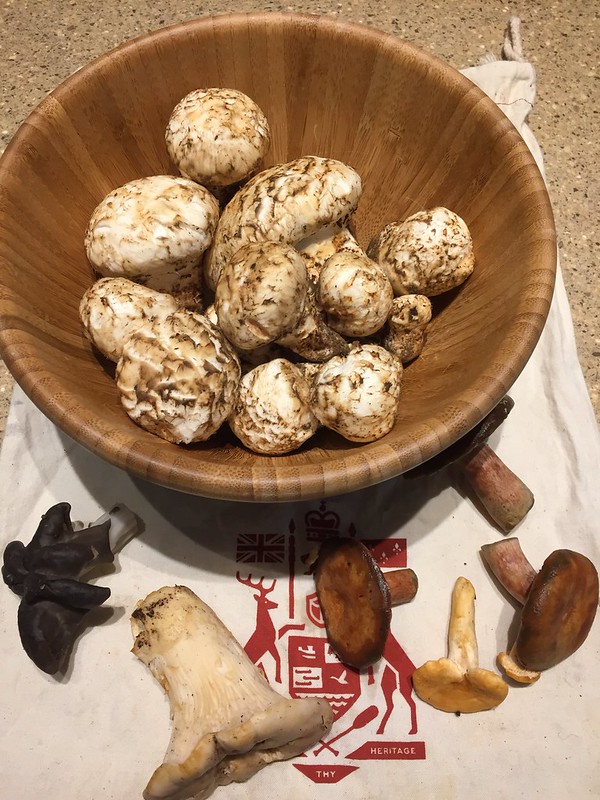
Same forest near Nanaimo, very large and waterlogged White Chanterelles, Firm and no bugs on the Red Juice Milky Caps, and lots of Elfin Saddle. First two Hedghogs I've found near Nanaimo this year.

Above lower left, the one White Chanterelle that I brought home. Even when they were newly emerged (last two weeks?) like this one, most were too waterlogged to bring home.


Monday, October 10, 2016

Golden Chanterelles are out Near Campbell River

Spent an enjoyable day wandering through some mushroom patches I scoped out two years ago in the Sayward Forest near Campbell River. Found lots of Golden Chanterelles at all stages of development, so I would say we are early to mid season on the North Island. I haven't seen any in my usual haunts near Nanaimo, so suspect we are a week or two behind. Here is a video from today, and a few photos.


Sunday, October 9, 2016

Last of the Whites for 2016

Spent a pleasant day yesterday wandering through the local forest where I've been picking White Chanterelles all summer, to find most of them now too mushy for keeping -- but I did find a few keepers. No Goldens yet, in that patch of woods. Heading up Island tomorrow to see what I can find. Here is a video of some of the finds yesterday:

Saturday, September 10, 2016

The White and the Blue

I've seen blue mould on mushrooms over the years and generally I just leave them in the field to do their thing, i.e. reduce the mushroom to a dead dark lump. But I heard from a mushrooming veteran that the blue moulds are only skin deep, so you can cut away the mouldy portions and eat the rest. Anyone know if this is true for sure?

Sunday, July 10, 2016

First White Chantrells

The unusual amount of rain this June brought out a flush of many different mushrooms that I don't normally see till late August or early September, including one of my favorites, the white Chanterell. Here is a video from today's walk in the forest above Nanaimo.


Russula Rosacea or Russula xerampelina?


White Chanterelle (Cantharellus subalbidus)


Saturday, October 31, 2015

Large Fluted Black Elfin Saddle and a Sweet Patch of Sweet Tooth

It is hard to believe that I could love the Sayward Forest, just north of Campbell River, any more than I already do. I've been enjoying it from the canoe for years, and over those years I have gazed at certian forests thinking, "I'll have to come back here in mushroom season." This year I did.

In the above video I ramble for a bit about the type of forest, then show some truely MASSIVE Elfin Saddles, a nice patch of Hedghogs, and more.

Here is a video just of the Hedghog Patch:

And just of the Elfin Saddles:

I'm really interested to hear from anyone who has eaten Elfin Saddles, how you cook them, and if it is worth it. Some smell delicious, some don't -- Why is that?

Thanks!

Wednesday, October 28, 2015

The Secret to Delicioius Chanterelle Mushrooms

I remember the first time I tasted a wild mushroom. It was a Giant Puffball that my father had rescued from us children.

"Oh, hold on!" my dad called, and something in the tone in his voice made us stop. Someone, not me, one of the other kids I'm sure, was winding up for a kick at the baseball sized mushroom. Dad plucked it, took it in the house, cut it into "steaks" and fried the steaks in butter till they were golden and almost black around the edges. He handed me one of the slices on a plate with a fork and I sniffed it wearily. Then I took a bite. I never looked back.

I was 12 when that happened and I've been frying wild mushrooms in butter ever since. But I have to say there are a few things that help mushrooms shine. A fine olive oil is as good as butter, the right cheese, garlic for some types, onions for most, and for Chanterelles, a good rich Cabernet Sauvignon.

Here is my recipe:


Friday, October 31, 2014

Fluted Black Elfin Saddle, Golden Chanterelles, Hedgehog

Helvella lacunosa


 Found these Fluted Black Elfin Saddles today, along with a few Chanterelles and one lone Hedgehog. Was surprised to find the hedgehog!
Hydnum umbilicatum

Golden Chanterelles


Monday, October 13, 2014

Lots of Boletes, Puffballs, and Slimmy Gomphidius

13 October 2014
Suillus brevipes

Sulfer Tuft?
Gomphidius glutinosus?


Still not sure what this is....


Suillus lakei

Lycoperdon perlatum

Wednesday, October 8, 2014

Tuesday, September 9, 2014

White Chanterelles

Monday 08 September 2014

Several days of rain in August and a day of light rain a week or so ago has brought out the White Chanterelles.

I filmed a little video of the find:


Cooked a bunch of them for dinner last night, and breakfast this morning. Very firm, on the verge of being too dry, but they pick up the butter really nicely, making for a very creamy smooth texture in the mouth with good tooth. This reminds me of just how nice White Chanterelles are compared to their more popular sisters the Pacific Golden Chanterelles.I think I like them better than the goldens.

Sunday, November 24, 2013

First Frost

Earlier this week the temperature dropped below freezing. Last weekend I had the pleasure of showing some friends a spot I knew to be good for hedgehogs and chanterelles and as it happened we found a small quantity of both.
Then this weekend I visited some old haunts to see if anything was left, and to my delight I found a good number of fairly large belly button hedghogs, and some late Golden Chanterelles. I also visited a log where I had left an Admirable Bolete and found that it had begun to rot. So with the data from several years now in hand I came up with the following table for when the various choice forest mushrooms are likely to flush. I'll adjust it in the future as I gather more data.


August September October November December
Lobster


White Chanterelle


Pacific Golden Chanterelle


Cauliflower


Bleeding Milk Caps


Admirable Bolete


Mika Cap


Pear Shaped Puffball


Conifer Coral Hericium


Club


Fluted Black Elfin Saddles


Hedghogs


Matsutake


Winter Chanterelle


Winter Oyster


Sunday, September 25, 2011

Gymnopus dryophilus 76%

I collected a sample and did a spore print overnight. Then I ran all the variables through Matchmaker. it came up with only one option: Gymnopus dryophilus, or common Collybia.

Here is the spore print:
I've interpreted this as cream, pale yellow, yellow-brown, or orange brown. The photos doesn't really look like it does with the naked eye. I would say it is more cream than anything.

Matchmaker is a very interesting and complex program. I can't believe all the variables. The algorithms must be "gnarly dude."


It is a nice looking fungus, with a pleasant fungusy smell.


When I use the little option in Matchmaker for reducing the percentage match it gives me other choices.
  1. Lepista inversa*  63%
  2. Paxillus involutus*  61%
  3. Gymnopus confluens*  61%
  4. Cortinarius semisanguineus*  61%
  5. Clitocybe albirhiza*  61%
Of these, Lepista inversa and Cortinarius semisanguineus also look like good candidates. Except that my specimen does not have "decurrent gills that become cap-colored." Well, they are cap-colored, but not decurrent (extending down the stem below the point of attachment).

Cortinarius semisanguineus looks more like my specimen in some ways but mine is probably not as brown and with a thinner stipe, and definitely not red to brown spores.

So, based on the information I was able to enter, this is probably Gymnopus dryophilus. It sure smells nice, but it will take a few more years of learning about identification before I will even consider eating one!